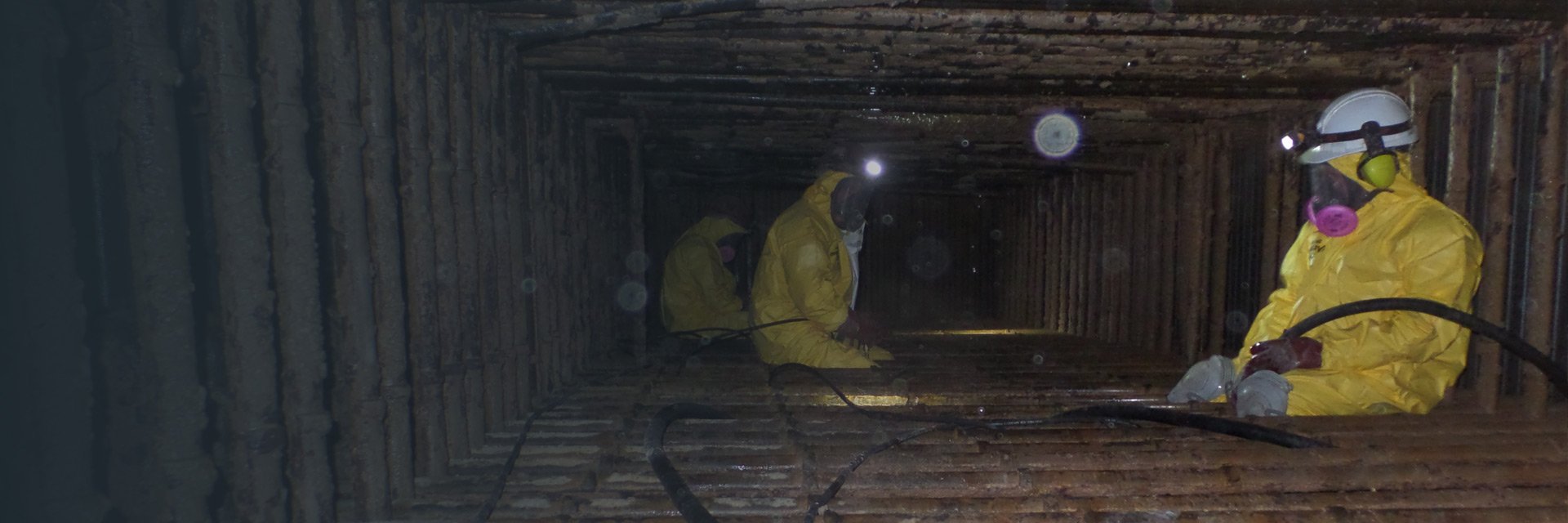
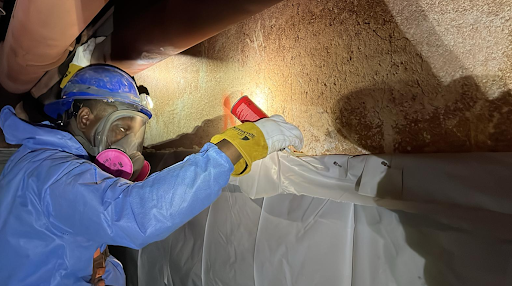
When a major refinery on the Texas Gulf Coast scheduled a planned shutdown for the summer of 2025, the stakes were high. Multiple heaters required full performance restoration promptly, safely, and within a strict timeline. The complexity of the project, involving multiple heater configurations in a high-risk environment, rendered conventional cleaning methods infeasible, prompting the refinery to turn to CTP Environment for the task.
The Solution
CTP utilized its proprietary NEUTROL® cleaning process, engineered to achieve full performance recovery under demanding shutdown conditions.
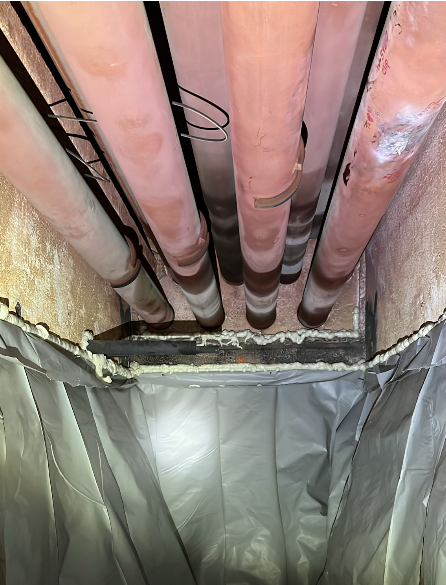
Before any cleaning began, the team installed a custom-engineered tarping system to fully protect surrounding critical assets, including fiber refractory. Highly trained specialists executed the installation, ensuring total containment and operational safety throughout the project.
With all protections in place, the CTP team initiated the NEUTROL® dual-action process, which combines:
- Targeted chemical action to break down and neutralize deposits
- Powerful mechanical action to eliminate remaining fouling
This method provided uniform, deep cleaning across each heater section while safeguarding equipment and refractory.